
From Chemistry to the Cosmos: A Spring of Community Engagement at Queen Mary
/filters:format(webp)/prod01/channel_262/queen-mary-university-of-london/media/qmul/publicengagement/013-(1).JPG)
Spring 2026 Community Engagement activity
Over the past few months, we have continued to create meaningful and welcoming community engagement opportunities, bringing together Queen Mary University of London staff, students, and local communities. These initiatives have provided valuable ways for people to connect with the university, while also strengthening our ties with the wider community.
Between January and March 2026, we supported a diverse programme of events both on and off campus, engaging hundreds of people of all ages with Queen Mary research and community collaboration. Activities ranged from chemistry workshops with home-educated students to learning about the incredible world of fungi, as well as large-scale STEAM events that brought together science, art, and faith. There has truly been something for everyone.
Below is a breakdown of what we’ve been up to.
Chemistry with the Tower Hamlets Home School Network
In January we collaborated with Dr Tippu Sheriff and Dr Eliza Hunt from the School of Physical and Chemical Sciences, and the Tower Hamlets Home School Network to host a chemistry engagement event on the Mile End campus.
More than 85 parents, guardians, and children aged 8-15 from across Tower Hamlets, Newham, Redbridge, Waltham Forest, and Barking and Dagenham attended the session, many of whom were stepping onto a university campus for the first time. Funded by the Royal Society of Chemistry, the event gave home-educated children the opportunity to see live science demonstrations and take part in practical chemistry activities, while also learning more about science pathways and university life.
With 94% rating the event excellent or good, the response from families was overwhelmingly positive. Parents reflected on how valuable it was for home-educated children to access lab-based experiences, with one noting, “More practical work for homeschooled children to gain lab experience is a much required area.” Others highlighted the importance of universities taking an inclusive and proactive approach to engagement, particularly for children from underrepresented backgrounds.
Professor Tippu’s enthusiasm and passion was frequently mentioned in feedback, with families praising his ability to engage both children and parents. One attendee shared, “it was evident he is passionate about his field and wanting children of the BAME community to excel in the field of science.” The success of the event led to plans for a recent follow-up event funded by a CPE Inclusive Growth Grant, as this partnership continues to grow.
Climate Action Week
In February, we led two events as part of the university’s Climate Action Week. The first was an East London Research Network (ELRN) event; Environmental Resilience in East London, a convening of Queen Mary staff, students, and community leaders working across climate action, sustainability, and environmental justice. Designed as a practice-sharing and networking session, the event had an even 50/50 split between community participants and Queen Mary colleagues. Presentations, discussions, and networking created time to celebrate the incredible work already happening across East London, while also exploring shared challenges and opportunities for collaboration. The event reinforced the value of creating intentional spaces for connection, learning, and mutual support across sectors.
Later that week, we partnered with MAD LEAP CIC to deliver Community and Fantastic Fungi at R-Urban Poplar, bringing community engagement beyond the campus and into the community. This interactive event invited participants from a wide range of backgrounds and age groups to explore systems thinking, reshaping society, and the fascinating world of fungi through talks and hands-on mushroom activities. By combining Economics Academic’s Alessandro Merendino’s (School of Business and Management) research with MAD LEAP’s community-led work, the session demonstrated the power of bringing together knowledge from the university and community organisations, and how it can energise the public.
Moon Palace
In March we collaborated with the School of Physical and Chemical Sciences to bring the incredible mobile observatory housed within a converted school bus to campus for two days of events celebrating science and community.
On day one of Moon Palace on campus, we hosted Moon Palace: The Crescent & the Cosmos which brought together Queen Mary and London Moonsighters for a special evening during Ramadan. Attendees gathered to learn about the moon and stars, share iftar, pray together, listen to poetry and step inside Moon Palace itself. This sold-out event showed a strong interest and excitement for experiences that bring faith and science into dialogue.
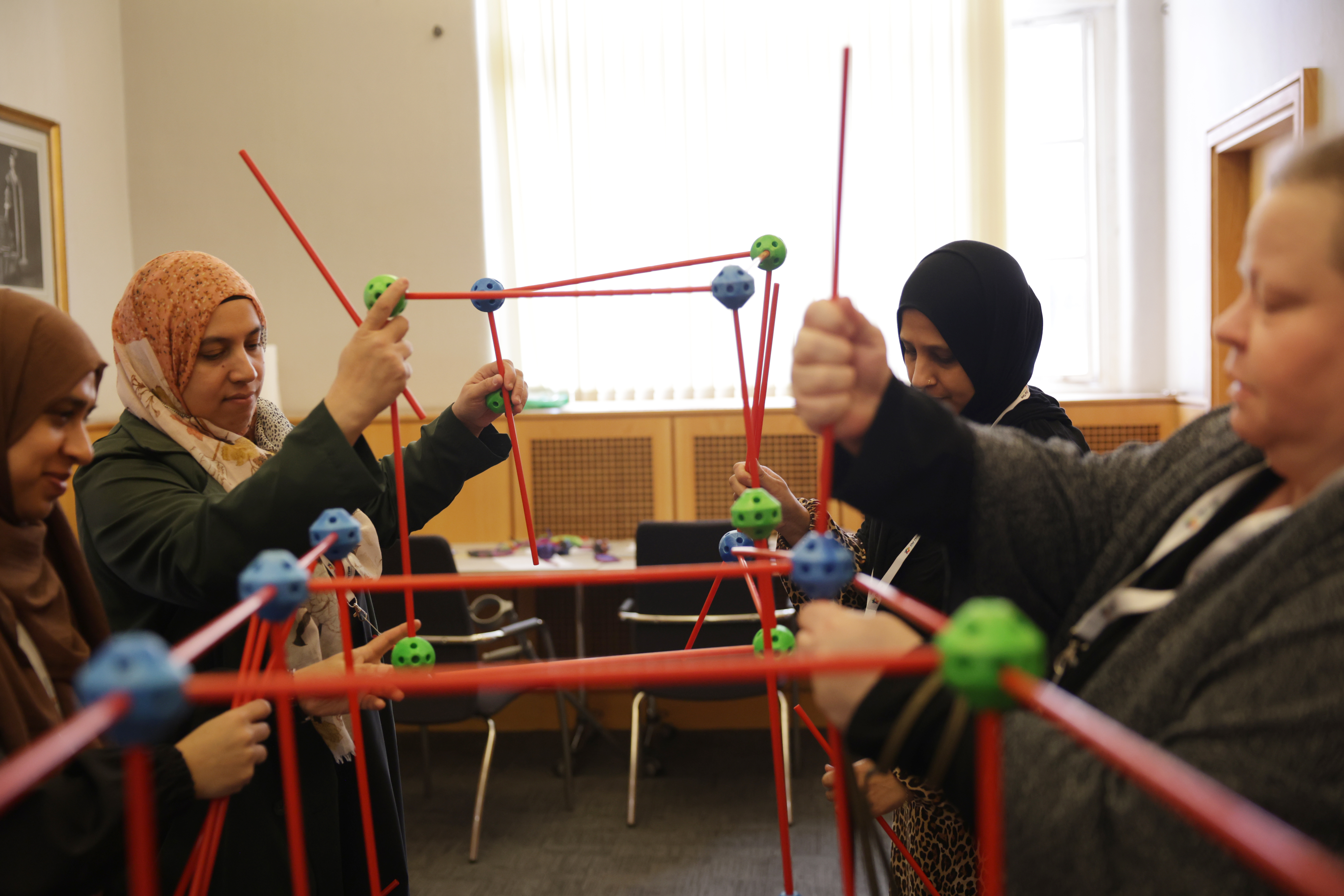
The following day, Moon Palace returned for a STEAM activity fair, welcoming over 145 attendees. The event brought together schools, home-educated students, SEND families, researchers, and student ambassadors, for an afternoon of hands-on activities, campus tours, and exploration. A wellbeing and sensory space led by SEND Parent Ambassadors proved popular, ensuring the event was inclusive and supportive.
Feedback from the day was incredibly encouraging, with 95% of attendees saying they loved or liked the event. You can read more about this in our recent blog post.
Women’s History Month: stories of liberation in East London
Our final event in this series was a celebration for Women’s History Month with an archival and creative event focused on Women’s Liberation in East London. In collaboration with Queen Mary Archives, Tower Hamlets Archives, and The OITIJ-JO Collective, attendees came together to explore past and present struggles for women’s justice.
Alongside archive presentations, participants took part in a Nakshi kantha embroidery workshop. It was wonderful to learn the history of this practice and then try creating our own designs. With 100% of attendees rating the event as good or excellent, it’s clear the event resonated with the community. The evening highlighted the power of archives, art, and community to bring history into conversation with lived experience today.
Across all of these events, a common thread runs through the work: sharing knowledge between the university and community, and creating inclusive, welcoming spaces for learning and connection. As we move into the next season of engagement, these partnerships, stories, and shared moments will continue to shape how we work with and alongside our communities.