
Zero Deaths Under 25: How HPV Vaccination Is Transforming Cervical Cancer Prevention
A generation ago, eliminating cervical cancer deaths seemed unimaginable. Today, HPV vaccination is making that vision a reality. Professor Peter Sasieni explains how one of the greatest public health successes of our time is saving lives.
HPV vaccination has transformed the landscape of cervical cancer prevention, with growing evidence showing its impact on both cancer incidence and mortality.
In this article, Professor Peter Sasieni reflects on the scientific discoveries that led to the development of the HPV vaccine, the evidence of its success, and the challenges that remain. Drawing on more than 35 years in cancer epidemiology, he explains how one of the most successful public health interventions of modern times has brought us closer than ever to eliminating cervical cancer deaths in future generations.
Since 2020 there have been no deaths from cervical cancer in England in women under the age of 25 - zero, zilch, nada! That is not some freak statistical blip but comes as a result of HPV vaccination which has been offered to 12-year-old girls since 2008.
It really is a reason to celebrate.
Whilst the numbers of deaths in young women were never great, each one was a daughter and many were sisters, wives and mothers. Each one was a tragedy. Historically there were several such tragedies each year.
The deaths prevented in very young women is just the tip of the iceberg. We’ve already observed nearly 200 fewer deaths in women aged under 30. As this generation of women ages, HPV vaccination will be preventing between 500 and 1500 deaths from cervical cancer across the UK every year.

It seems like coming full circle. My first publication in PubMed was a letter in the Lancet in 1991 entitled: Trends in cervical cancer mortality. Today, also in the Lancet, the paper is titled: “Cervical cancer mortality trends following HPV vaccination in England, 2001–24: an analysis of population-based mortality data”. How little has changed in 35 years—I am still publishing analyses of trends in cervical cancer mortality in The Lancet! On the other hand, so much has changed. In 1991, I would never have imagined that today we would be talking about eliminating deaths from cervical cancer thanks to HPV vaccination. Only a few years earlier there had been 2000 deaths a year from cervical cancer in England and Wales. I was hoping that the relaunched cervical screening programme would help to bring that number down to under a thousand. And it did. But never would I have predicted that during my career we might be talking about getting rid of the second thousand.
Let me go back slightly earlier to when I was a PhD student in the School of Public Health at the University of Washington. We students were based in a two storey “tin can” – a temporary building that had been in place for years! I was in biostatistics – studying semiparametic models for analysing clinical trials data. Down the corridor was a student, Laura Koutsky, in epidemiology. Laura’s PhD was on the epidemiology of human papillomavirus (HPV) and its link to cervical cancer. There seemed to be absolutely no overlap in what we were working on. Little did I know that within a few years, I too would be interested in HPV and its role in cervical cancer.
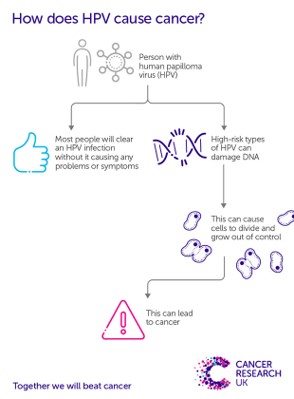
The role of HPV in cervical cancer is now well established, but it was not until 1995 that the International Agency for Research on Cancer (IARC) first declared HPV to be carcinogenic. Even then it was not universally accepted. I recall giving a lecture about the IARC declaration to a group of gynaecologists most of whom did not believe that HPV caused cervical cancer. It was not until 2008 that Harald zur Hausen won the Nobel Prize for Physiology or Medicine for or his discovery (in 1983) of human papilloma viruses causing cervical cancer.
Once it was established that certain types of HPV caused cervical cancer, the race was on to develop a vaccine against the virus. In 2002, a trial led by Laura Koutsky studying a vaccine against HPV type 16 was published in the New England Journal of Medicine. The results were stunning. “The incidence of persistent HPV-16 infection was 3.8 per 100 woman-years at risk in the placebo group and 0 per 100 woman-years at risk in the vaccine group (100 percent efficacy; 95 percent confidence interval, 90 to 100; P<0.001). All nine cases of HPV-16–related cervical intraepithelial neoplasia occurred among the placebo recipients.”
Further trials followed of two commercial vaccines both targeting HPV 16 and HPV 18 the two most common and virulent HPV strains that cause cervical cancer. Both vaccines were extremely effective at preventing new persistent infections. In September 2008, the UK introduced HPV vaccination to females. Initially it was offered to 12-13-year-olds with a catch-up campaign to reach those born between September 1990 and August 1995. Uptake among 12–13-year-olds was very high - over 88% received at least one dose and 73% had all three doses of the vaccine. Back then we were recommending three doses. But subsequent research has shown that a single dose is almost as effective.
So, we knew that the vaccine worked under trial conditions at preventing infections and in preventing “pre-cancer” caused by the virus. But would it work at a population level and would it work in preventing cancer. We always assumed it would. In 2010 we published a paper modelling the predicted impact of HPV vaccination. Back then we thought three doses were required to give protection. We said: “With 80% coverage in women aged 12-13, we project an eventual 63% reduction in invasive cancer, a 51% reduction in CIN3 and a 27% reduction in cytological abnormalities before age 30”.
Those predictions turned out to be wildly conservative. A decade later we had actual data. We reported a 62% reduction in cervical cancer for cohorts offered HPV vaccination aged 14-16 and 87% for those offered vaccination aged 12-13. Results for CIN3 were even more dramatic -75% and 97% respectively.

So, what is new in our 2026 paper? We have shown that vaccination is saving lives. Fewer women are dying from cervical cancer thanks to HPV vaccination. Why did we need to show that extra step? Partly just to complete the story. We finally have the empirical evidence going all the way from preventing infection to preventing death. Partly to address the sceptics. It is not simply that HPV vaccination prevents overdiagnosed pre-cancers and indolent early-stage cancers. It is also preventing fatal cancers. And partly to address a concern about the way public health interventions are sometimes implemented. We know that women who have not been vaccinated against HPV are also less likely to participate in cervical screening. Could it be that the big reduction in cervical cancer deaths is due to a big reduction in screen-detected micro-invasive cancers? Those cancers are rarely fatal—we studied 1905 women with such cancers, only three of them died over the following 8 years. There was always a slight concern that the fatal cervical cancers were primarily in a group of women who did not participate in cervical screening and who would not be reached by HPV vaccination. This paper shows that that is not the case. Among women aged 20-24 over 88% of whom received at least one dose of HPV vaccine in their early adolescence, there were no deaths from cervical cancer in the last 5 years (2020-2024). “In earlier birth cohorts, who were offered vaccination up to age 18 years with coverage of around 63–87%, mortality reductions of 80% (51–94) in women aged 20–24 years in 2015–19, and 69% (55–79) in women aged 25–29 years in 2020–24 were observed”. In summary the fall in cervical cancers observed previously isn’t just prevention of cancers that would otherwise have been detected early by screening. The dramatic fall in deaths that we now report shows that HPV vaccination is reaching those that need it most and has resulted in a substantial reduction in deaths in young women across England as a whole.
This is all wonderful news. The combined effort of epidemiologists, biostatisticians, virologists, immunologists, public health physicians, school nurses and others has led to a near elimination of cervical cancer in those born between 1995 and 2004.

But what about more recent cohorts? Unfortunately, HPV vaccination coverage has fallen sharply since COVID. Instead of having nearly 90% coverage, we now only have 75% HPV vaccine coverage among girls at the end of year 10 (aged 15). And that hides geographic variation. Uptake is just 61% in London. If things don’t change, we could see HPV infections becoming more common again, and cervical cancer incidence and mortality too will increase.
We have the tool – HPV vaccines – to eliminate cervical cancer deaths. We’ve shown it is possible. Now is the time to redouble our efforts to ensure HPV vaccination uptake reverts to pre-COVID levels and that we eliminate this awful cancer once and forever.