
As Higher Education continues to navigate rapid technological, economic and social change, educators are being asked to work on two fronts at once: responding to the conditions shaping teaching and learning now, while also anticipating what may come next. Questions around artificial intelligence, digital capability, assessment, student engagement, learning spaces and wellbeing are no longer separate areas of innovation. They are increasingly interdependent parts of how institutions design meaningful, inclusive and sustainable learning experiences.
For this edition of the Digital Education Studio newsletter, we invited two sector leaders to reflect on the present and scan the horizon.
Santanu Vasant, Head of Teaching and Learning at LD Training Services Limited, explores how curriculum and learning design can connect digital and physical spaces through the idea of “intelligent immersion”. Sue Beckingham, Associate Professor and National Teaching Fellow at Sheffield Hallam University, turns attention to digital wellbeing in the age of Generative AI.
Taken together, these contributions offer a timely view of Higher Education as it is being reshaped by emerging technologies, shifting student needs and evolving expectations of teaching, learning and assessment.
Designing “Intelligent Immersion” in the Digital and Physical Learning Space
Santanu Vasant
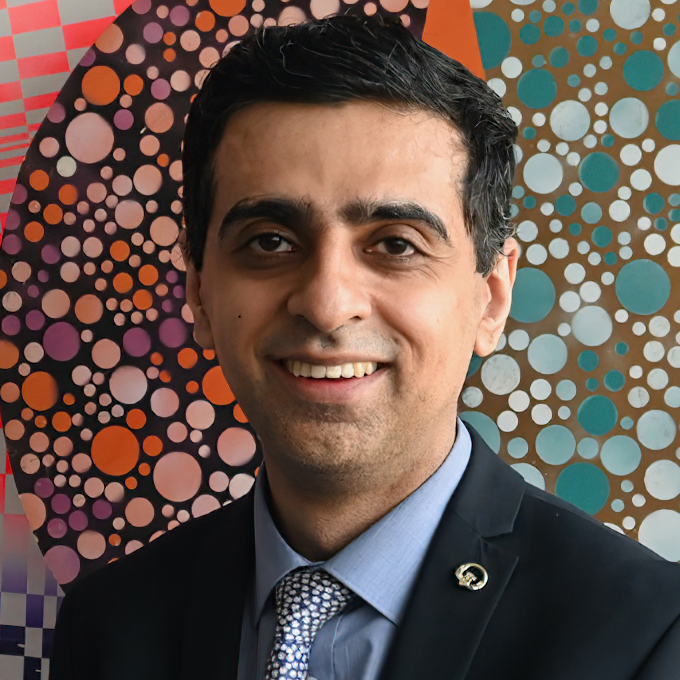
Head of Teaching and Learning, LD Training
BlueSky
LinkedIn
Developing a good curriculum is the most important thing we can do as educators, besides teaching, facilitating, tutoring and assessing our students. Linking learning across space and time, in the digital and physical learning spaces that our students inhabit, is key to student learning outcomes (Vasant, 2024). This means understanding the affordances of these learning spaces and designing human-centred “intelligent immersion” (Liakopoulos and Liapakis, 2026) between the tools and technologies chosen in a collaborative way with key stakeholders. These include academics, learning technologists, careers professionals, librarians, educational developers and students or recent alumni. Thinking about the blend of in-person and online, plus asynchronous and synchronous learning is important. Our students continue to lead complex lives and with the cost of living in the UK continuing, many are deciding whether to earn or learn every week, so barriers to learning and a choice of modality should be available, as well as meaningful interactions in the physical learning space when they do attend classes in-person.
Scanning the horizon
Generative AI shows no signs of abating and is being embedded into more tools and technologies. The challenge remains educator capability and capacity to use these platforms and to prove that they make a real difference to students' learning experience. The environmental and societal impact of Generative AI and related technologies remains a concern. The integration of Agentic AI into existing platforms, such as the virtual learning environment, may finally see the shift from a repository of content into a personalised learning environment to nudge the students to better learning behaviours, supporting those most vulnerable. (Chimbo, 2026).
For educators, Generative AI might finally shift at scale the drive for more authentic, process, as well as final product assessment, where educators evaluate the student’s work as the module progresses, using tools and technologies to assess critical thinking and problem solving, to make sure the work really is their own, as Generative AI presents the challenges of academic integrity and workload to detect it on an already stretched sector. This might make the plagiarism software we currently have seem outdated and no longer fit for purpose.
Revisiting Digital Wellbeing in the Age of Generative AI
Sue Beckingham

Associate Professor Learning and Teaching and National Teaching Fellow, Sheffield Hallam University
Jisc’s model of digital wellbeing (2019) encompassing social, personal, learning, and work dimensions offers a valuable framework for understanding the impact of digital practices in higher education. However, the rapid use and integration of generative AI (GenAI) tools require these dimensions to be reconsidered in light of new pedagogical, cognitive and mental health challenges (Abedin et al, 2026; Turner and Stephenson, 2026).
In terms of digital social wellbeing, GenAI can support communication, accessibility and inclusion, but they also raise concerns about authenticity, trust and the potential displacement of human interaction. AI-generated contributions may obscure individual voice, potentially undermining meaningful participation and peer relationships. At the same time, uneven GenAI literacy risks widening disparities in students’ ability to engage confidently in digital spaces. Digital personal wellbeing is similarly affected; while GenAI can reduce cognitive load, support organisation and provide personalised assistance, it may also contribute to over-reliance, information overload and difficulties in maintaining healthy digital boundaries. It may also introduce dependency and new forms of anxiety, including pressure to use GenAI to remain competitive. The balance between support and over-reliance becomes critical.
Within digital learning wellbeing, GenAI offers significant benefits through personalised feedback, idea generation and support for diverse learners. However, inconsistent guidance and unclear assessment expectations can undermine student confidence and motivation, leading to surface engagement rather than deep learning. Finally digital work wellbeing, a productivity paradox is emerging. While GenAI can streamline tasks for both students and educators and has the potential to improve productivity and reduce routine tasks, it may simultaneously raise expectations, intensify workload, and blur boundaries around effort and authorship.
Scanning the horizon
Looking ahead, a key strategic priority is the integration of GenAI literacy as a dimension of digital wellbeing. This involves supporting students and staff not only to use GenAI effectively, but to do so critically, ethically, and with awareness of its impact on learning and cognitive wellbeing. Digital wellbeing must evolve beyond managing technology use to sustaining agency, confidence, and meaningful engagement in AI-mediated learning environments; and this will require ongoing support and guidance for all. There needs to be a coherent structure to enable ‘collaborative sandpits’ where both staff and students work together to plan, pilot and evaluate different approaches (Beckingham et al, 2024). Over the coming years, the most important dimension of digital wellbeing may be ensuring that GenAI augments rather than diminishes our capacity to think, learn, create and connect as humans.
Biographies
Santanu Vasant
Santanu Vasant is Head of Teaching and Learning at a private education provider based in North London. He is a Principal Fellow of Advance HE. He has over 20 years of experience working in public sector universities in a variety of academic development and senior leadership roles. His research interests are in the design of physical and virtual learning spaces. He has published and presented this work nationally and internationally as an invited keynote speaker. He is the creator and host of the Talking Higher Education podcast and a member of the Staff and Education Development Association’s Book Series and Educational Development Committees.
Sue Beckingham
Sue Beckingham is an Associate Professor in Learning and Teaching, a National Teaching Fellow, and Learning and Teaching Lead in the School of Computing and Digital Technologies at Sheffield Hallam University. She is also a Principal Fellow of Advance HE, a Senior Fellow of the Staff and Educational Development Association and member of SEDA Executive Committee, and a Certified Management and Business Educator. Externally Sue is a Visiting Professor at Arden University and a Visiting Fellow at Edge Hill University. Her research interests include social media for learning and the use of technology to enhance active learning and teaching. She has published and presented this work nationally and internationally as an invited keynote speaker.
References
Designing “Intelligent Immersion” in the Digital and Physical Learning Space
Chimbo, B., Maguraushe, K. and Mutunhu Ndlovu, B. (2026). Immersive equity: virtual reality and agentic artificial intelligence as catalysts for equity in education. Frontiers in Education, 11. doi:https://doi.org/10.3389/feduc.2026.1761456
Liakopoulos, K. and Liapakis, A. (2026). Intelligent Immersion: AI and VR Tools for Next-Generation Higher Education. AI in Education, 2(2), p.13. doi:https://doi.org/10.3390/aieduc2020013
Vasant, S. (2024). Linking Learning Across Space and Time: Learning Design for Better Student Outcomes. Available here: https://heprofessional.co.uk/premium/linking-learning-across-space-and-time-learning-design-forbetter-%20student-outcomes
Revisiting Digital Wellbeing in the Age of Generative AI
Abedin, M.Z., Hayajneh, A. and Raahemi, B. (2026). Pedagogical Use of Responsible Generative AI in Higher Education; Opportunities and Challenges: A Systematic Literature Review. AI in Education, 2(2), p.11.
doi:https://doi.org/10.3390/aieduc2020011
Beckingham, S., Lawrence, J., Powell, S. and Hartley, P. (2024) Using Generative AI Effectively in Higher Education: Sustainable and Ethical Practices for Learning Teaching and Assessment. Routledge. https://doi.org/10.4324/9781003482918
Jisc (2019) Digital wellbeing. Available at: https://digitalcapability.jisc.ac.uk/what-is-digital-capability/digital-wellbeing/ (Accessed: 5 June 2026).
HEPI. (2026). What Matters Most? 20 years of the student experience - HEPI. [online] Available at: https://www.hepi.ac.uk/reports/what-matters-most-20-years-of-the-student-experience/